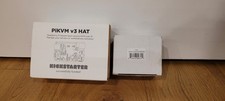
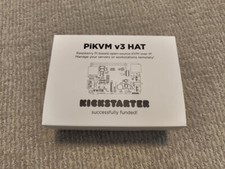
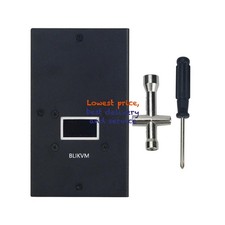
What is PiKVM?
PiKVM is a feature-rich, production grade, open-source, Raspberry Pi based KVM over IP device. It will help you to manage servers or workstations remotely, whatever the state of the operating system or whether one is installed. PiKVM allows you toturn on/off or restart your computer, configure the UEFI/BIOS, and even reinstall the OS using the Virtual CD-ROM or Flash Drive. You can use your remote keyboard and mouse or PiKVM can simulate a keyboard, mouse, and a monitor, which are then presented in a web browser as if you were working on a remote system directly. It’s a true hardware-level access with no dependency on any remote ports, protocols or services!
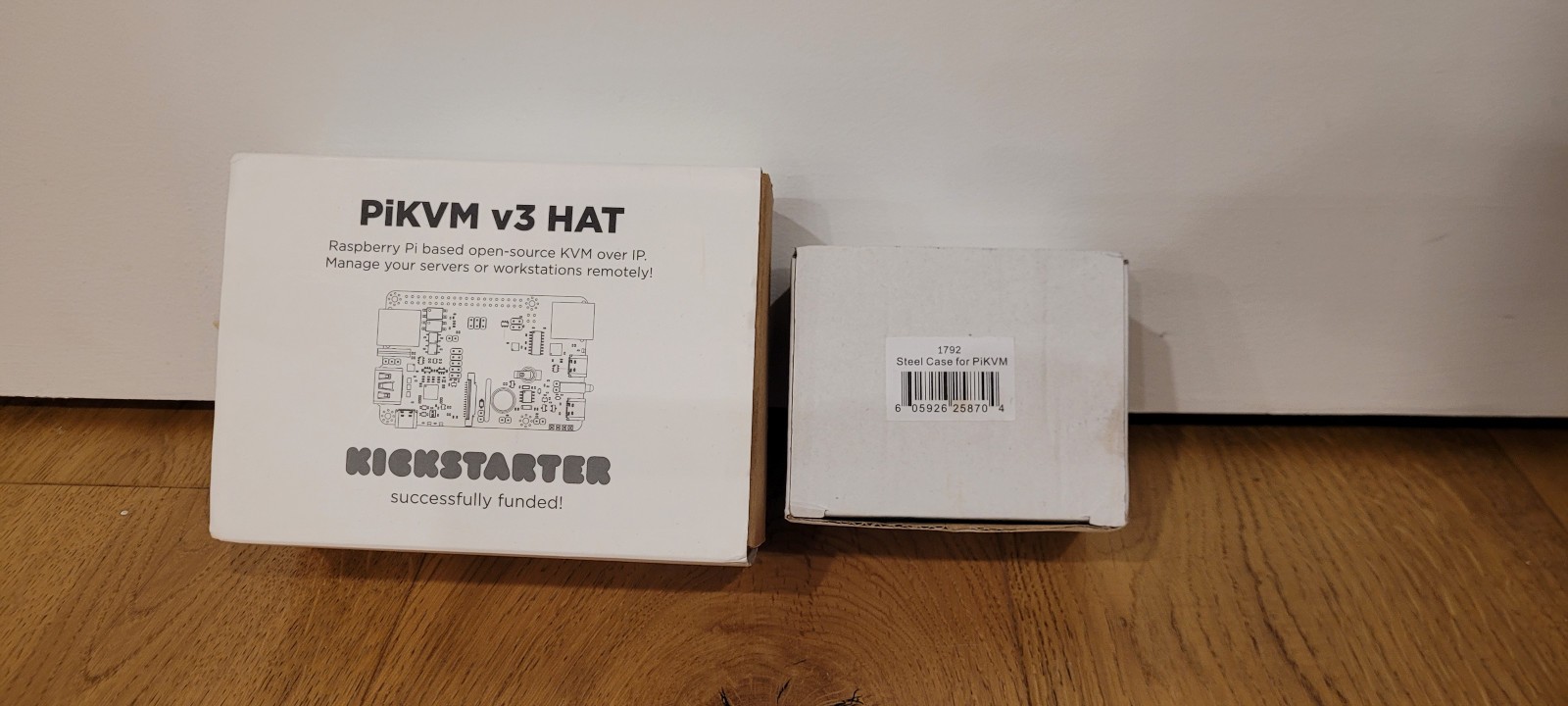
The PiKVM v3 HAT Board is designed to work with the Raspberry Pi 4 and provides the following features:
- HDMI capture device with max resolution 1080p 50Hz and audio support
- Keyboard & mouse emulation
- Mass storage emulation (i.e., virtual flash drive or CD drive provided by image file saved on PiKVM)
- Ability to simulate "removal and insertion" for USB for above mentioned devices
- ATX controller (allowing to switch power even if target device is off or operating system hangs)
- Onboard real-time clock
- 5v PWM fan controller
- USB & RJ-45 serial console
kit includes
- The PiKVM v3 HAT board for Raspberry Pi 4
- USB-C bridge board
- ATX adapter board
- 2x Flat CSI-2 cables
- 7x jumpers, assorted colors
- 8x brass standoffs
- 8x screws
- Wires for connecting the ATX interface to the motherboard
Requirements
To use PiKVM v3, you will need the following things, which are NOT included in the kit:
- Raspberry Pi 4 (any amount of RAM is OK)
- 5.1v 3A power supply with USB-C
- A regular HDMI cable
- USB-C to USB-A cable with DATA lines (for keyboard and mouse emulation)
- Straight Ethernet cable (NOT crossover, to connect the HAT board and ATX board)
- Micro-SD card at least 16 Gb and class 10 is strongly recommended
Known issues & limitations
- The actual frame rate of the image received via HDMI will depend on the network bandwidth, resolution and the load on the Raspberry Pi. This is usually ~20-24 FPS for 1080p over LAN.
- AIMOS switches are not fully compatible with the video capture device (as with regular HDMI CSI bridge).
- There may be compatibility issues with some motherboards (such as HP or DELL) which are the same as those that exist with Pi-KVM v2. Not everything is perfect, but if you have already used Pi-KVM v2 - our new v3 will work perfectly and please you. If there is no image from the BIOS, you can fine-tune the HDMI settings, but it is possible that the USB keyboard or Mass Storage devices will not be available in the NOT INCLUDE Raspberry Pi 4 board. HAT and metal case